
The country's largest carmaker Maruti Suzuki India expects auto sales to bounce back to the glory days of 7 per cent growth by FY 27, helped by the proposed GST rate cut which is expected to bring down car prices by 3.5 to 8.5 per cent.

Electric vehicle (EV) sales in India rose 28.60 per cent to 1,80,238 units in June over the period year-ago, driven by massive jump in e-passenger vehicle volumes, Federation of Automobile Dealers' Association (FADA) said in a statement on Tuesday. Electric passenger vehicle sales, as per FADA data, stood at 13,178 units in the previous month compared to 7,323 e-PVs in June 2024, registering a sharp increase of 79.95 per cent year-on-year.

Passenger vehicle dispatches from companies to dealers increased 19 per cent year-on-year in November as demand remained robust post festive period, industry body SIAM said on Friday.

The country's largest listed auto parts company by market capitalisation, Samvardhana Motherson International, reported a better than expected operating performance in the second quarter (July-September) of 2025-26 (Q2FY26). Though the global passenger vehicle (PV) market is facing multiple headwinds, the company is outperforming on the back of higher content per vehicle and market share gains.
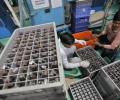
The automobile and auto-ancillary sector is expected to show strong Q3FY26 results, aided by festival-led demand, rationalisation in goods and services tax (GST) rates for select categories of vehicles, easing interest rates, and improving rural sentiment.

Electric vehicle (EV) penetration in the luxury car segment has seen a drop by nearly 3 percentage points in the GST 2.0 era with the internal combustion engine versions offering better total cost of ownership, according to industry players. While the trend is also visible in the mass market segment, it is the entry luxury segment that is witnessing a more marked shift towards internal combustion engine (ICE) vehicles as price difference between EV and ICE widened under the new GST rates.

Domestic automobile retail sales declined 4 per cent year-on-year in July amid drop in demand for passenger vehicles and two-wheelers, dealers' body FADA said on Thursday. Overall registrations dropped to 19,64,213 units last month, as compared to 20,52,759 units in July 2024.
Retail sales of electric passenger vehicles (ePVs) nearly doubled in July 2025, surging 93 per cent year-on-year (Y-o-Y) to 15,528 units, even as overall passenger vehicle (PV) retail volumes declined marginally. In contrast, electric two-wheeler (e2W) sales dropped by 4.3 per cent to 102,973 units, according to the Federation of Automobile Dealers Associations (Fada) data.

More Indians start car shopping online, pushing automakers and dealers to respond quickly, train staff, and use AI to turn clicks into showroom visits.

Fada estimates that global supply chain headwinds like scarce availability of rare earth elements for electric vehicle components and geopolitical tensions may affect urban consumer sentiment in June as well.

Mexico on Thursday imposed a tariff of up to 50 per cent on imports from its non-preferential trade partners, including India, a move that might hit New Delhi's annual $5.75 billion shipments to its third-largest car export market.

Automobile retail sales in India clocked best-ever performance last month aided by robust registrations across segments including passenger vehicles, two-wheelers and commercial vehicles, automobile dealer' body FADA said on Friday. The overall automobile retail sales rose by 26 per cent to 23,80,465 units last month, as compared with 18,93,647 units in November 2021. "November 2022 has clocked highest retails in the history of Indian automobile Industry with March'20 as an exception when retails were higher due to BS IV to BS VI transition," Federation of Automobile Dealers Associations (FADA) president Manish Raj Singhania said in a statement.

The government on Wednesday approved a Rs 7,280 crore scheme to promote manufacturing of rare earth permanent magnets, a move which would help reduce India's dependence on China.

Companies are squeezing more profits from their operations relative to the capital they put to work, the highest now since 2011. Profit after tax relative to capital employed came in at 10.47 per cent in September, shows data from the Centre for Monitoring Indian Economy (CMIE), higher than the 8.41 per cent seen in September last year. This is the highest since March 2010.

Passenger vehicle dispatches from companies to dealers rose 4 per cent year-on-year in September to 372,458 units, industry body SIAM said on Wednesday. The overall passenger vehicle dispatches last month rose 4.4 per cent to 372,458 units, as against 356,752 units in September 2024.

The fiscal tilt towards capex benefits companies in investment-related sectors like capital goods, defence equipment, engineering & construction and metal & mining. The planned cut in revenue expenditure will weigh on companies in consumption sectors like FMCG, consumer durables and retail.
Major Indian carmakers are preparing for sluggish domestic PV sales growth of just 1-2 per cent in FY26.

The meltdown in Dalal Street that wiped out investor wealth to the tune of 44 trillion in 2025 also seems to be having a ripple effect on the country's vibrant automobile retail sales.
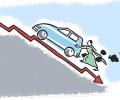
The only silver lining in March's performance -- which otherwise dragged down the financial year's momentum -- was a 6 per cent year-on-year (Y-o-Y) growth compared to March of the previous year. This is largely due to incentives, festival-driven gains, and new launches.

Hero MotoCorp is expecting its electric vehicle (EV) business to break even once it reaches monthly sales volumes of 25,000 to 30,000 units, which is a couple of years away, Chief Financial Officer (CFO) Vivek Anand said on Tuesday. "This year, in 2024-25 (FY25), if I really look at my EV performance, our volumes have grown by 200 per cent," Anand told analysts during the company's post-results conference call.

After a record-breaking year, India's automobile industry is entering 2026 on a relatively strong footing, with sales growth expected in the 6-8 per cent range. The outlook is underpinned by policy support, including GST rationalisation, easing monetary conditions, and income tax relief, which together are likely to improve affordability and sustain consumer demand across vehicle segments.

Passenger vehicle retail sales witnessed 3 per cent on-year decline in May with customers delaying purchases in several states due to India-Pakistan conflict and further softening of demand for entry-level models, dealers' body FADA said on Friday. The passenger vehicle registrations last month stood at 302,214 units, as compared to 311,908 units in May 2024.

Mahindra & Mahindra (M&M) is stepping beyond vehicle manufacturing to build a national electric-mobility ecosystem.

India's luxury auto market is rebounding after a slow start to 2025, with GST 2.0 emerging as the main catalyst.

'The slowdown in motor insurance premium growth is due to slower growth in vehicle sales. Also, there has been minimal hike in third-party rates in the past three years which is affecting the growth rate of third-party premiums.'

Hero MotoCorp Ltd (HMCL) has been the best-performing auto stock over the last three months, gaining over 17 per cent during this period. Multiple tailwinds, especially on the rural front, are expected to boost its volumes. In addition to the demand drivers, new launches too should help drive growth both in the commuter and premium motorcycle categories.

Retail sales of automobiles in India grew 8.31 per cent in August this year on the back of increase in registrations of vehicles across all major segments, automobile dealers' body FADA said on Thursday. As per data released by the Federation of Automobile Dealers Associations (FADA), total vehicle retail sales in the country stood at 15,21,490 units last month as compared to 14,04,704 units in August 2021. Passenger vehicles (PV) retail sales stood at 2,74,448 units as compared to 2,57,672 units in the year-ago month, a growth of 6.51 per cent.
Retail sales of passenger vehicles grew last month but the sales of two-wheeler and commercial vehicles remained low compared to the pre-COVID month of May 2019, according to automobile dealers' body FADA. On Monday, FADA said that overall auto retails stood at 16,46,773 units in May, down from 18,22,900 units in May 2019. "May 2022 retails when compared to May 2019 reveal that sales are still not on a growth trajectory as overall retails were down by 10 per cent.

Driven by robust demand, automobile retail sales in India rose to a record high this festive season with all segments, barring tractors, reporting year-on-year growth, dealers' body FADA said on Tuesday. Overall automobile sales rose 19 per cent to 37,93,584 units in the 42-day festive period this year as compared with 31,95,213 units last year. During the period, which starts from the first day of Navratri and ends 15 days after Dhanteras, passenger vehicle retail sales rose to 5,47,246 units, up 10 per cent from 4,96,047 units in the same period last year.
Automobile retail sales in India rose 11 per cent in September as better supplies from manufacturers enabled dealers to ramp up customer deliveries amid the ongoing festive period, Federation Of Automobile Dealers Associations said on Tuesday. Last month, total retail sales stood at 14,64,001 units as compared to 13,19,647 units in September 2021. FADA noted that October is expected to witness even better overall sales due to the festive season further gathering steam.

Gross GST collection rose 9.1 per cent to over Rs 1.89 lakh crore in September on the back of increased sales due to rate rationalisation, as per government data released on Wednesday.

Long standing number two passenger vehicle maker in India, Hyundai Motor India, has slipped to fourth position in the domestic market in terms of retail sales last month behind Maruti Suzuki India, Mahindra & Mahindra and Tata Motors, as per the latest data shared by dealer's body FADA. Hyundai Motor India clocked retail sales of 38,156 units last month, a dip of 20 per cent as compared with 47,540 units in February last year.
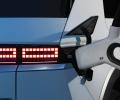
India may see its busiest EV festive season in 2025 with SUVs, luxury cars and scooters set to launch, but rare-earth supply bottlenecks risk delaying rollouts.

Automobile dealers' body FADA on Thursday sought a cut in GST on two-wheelers from 28 per cent to 18 per cent, saying the segment being essential for millions should not be categorised as luxury item. The industry body said it has appealed to the finance minister, chair of the GST Council, all GST Council members, the ministry of heavy industries, which supervises the automobile sector, and the ministry of road transport & highways. This timely and decisive intervention would help in making two-wheelers more affordable, reviving demand and reinvigorating an industry that has seen a significant slump in sales over the past few years, the Federation of Automobile Dealers Associations (FADA) said in a statement.

Automobile retail sales grew 9 per cent year on year in 2024 riding on the back of robust demand for two-wheelers and passenger vehicles amid challenging business environment, dealers' body FADA said on Tuesday. Overall vehicle registrations stood at 2,61,07,679 units last year as compared to 2,39,28,293 units in the 2023 calendar year, recording a growth of 9 per cent.
Automobile retail sales in India rose 14 per cent in January on the back of robust registrations across passenger vehicles, two-wheelers and tractors, dealers' body Federation of Automobile Dealers Associations said on Monday. Total sales across categories last month rose to 18,26,669 units, as compared to 16,08,505 units in January 2022. Passenger vehicle registrations rose to 340,220 units last month, an increase of 22 per cent as compared to 279,050 units in the year-ago period.

The government plans to establish a fully indigenous manufacturing ecosystem with an annual production capacity of up to 6,000 tonnes. The scheme is expected to run for seven years, according to official documents.

In absolute terms, both types of cars must cut emissions by about 28-29 g/km. But in percentage terms, the lighter 900-kg car must reduce emissions by 27 per cent, while the 1,500-kg car needs a 22 per cent cut. And the target becomes progressively stringent for both -- but, once again, the tightening is sharper for the 900-kg car than for the 1500-kg car.

Electric vehicle (EV) sales in India topped the 1 million mark in less than nine months in 2023, a milestone that took an entire year in 2022. According to data from the Ministry of Road Transport and Highways' Vahan Dashboard, 1,037,011 EVs were registered with regional transport offices till September 19, accounting for 6.4 per cent of the total automobile sales in the country this year. The sales surge can be attributed to increased individual purchases as well as business-to-business (B2B) acquisitions by EV fleet operators, industry sources said.
Starting January, the market is expected to welcome models like the Tata Punch 2025 which is expected to be around 6 lakh, Mahindra BE 07 EV around 29 lakh, Maruti WagonR Electric around 8.5 lakh, Toyota 3-Row SUV around 14 lakh, and Volkswagen Tera to be around 8 lakh.
